 Illustrative image
Sample journey
Island Highlights. View journey
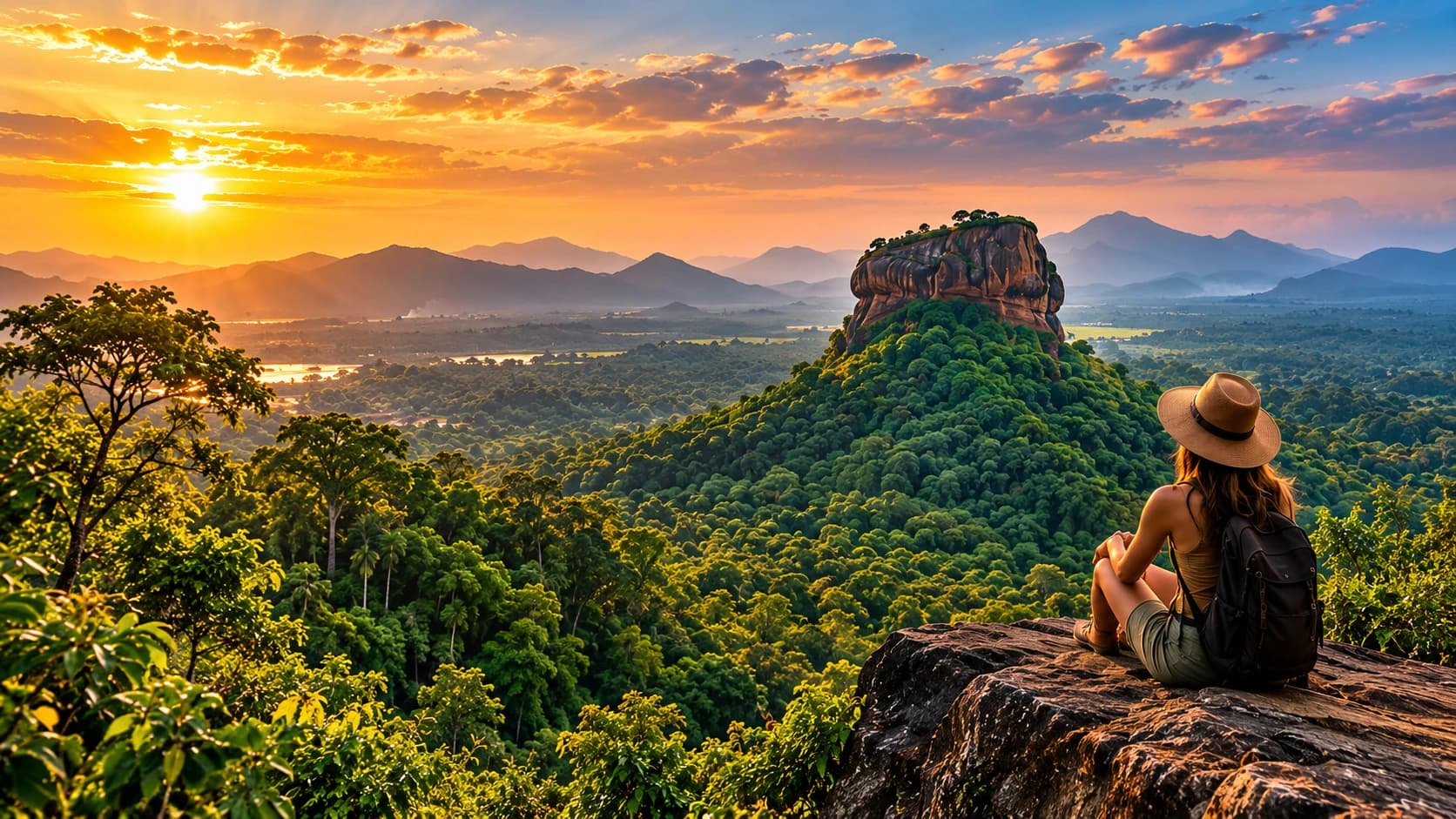
A first introduction to Sri Lanka: ancient sites, hill country and the south coast in one flowing route.
- Sigiriya
- Kandy
- Hill country
- South coast
- Often 10 to 14 days, always adjustable

Beaches & ocean
Palm-lined beaches, surf, snorkelling and, in season, whale watching along the coast.
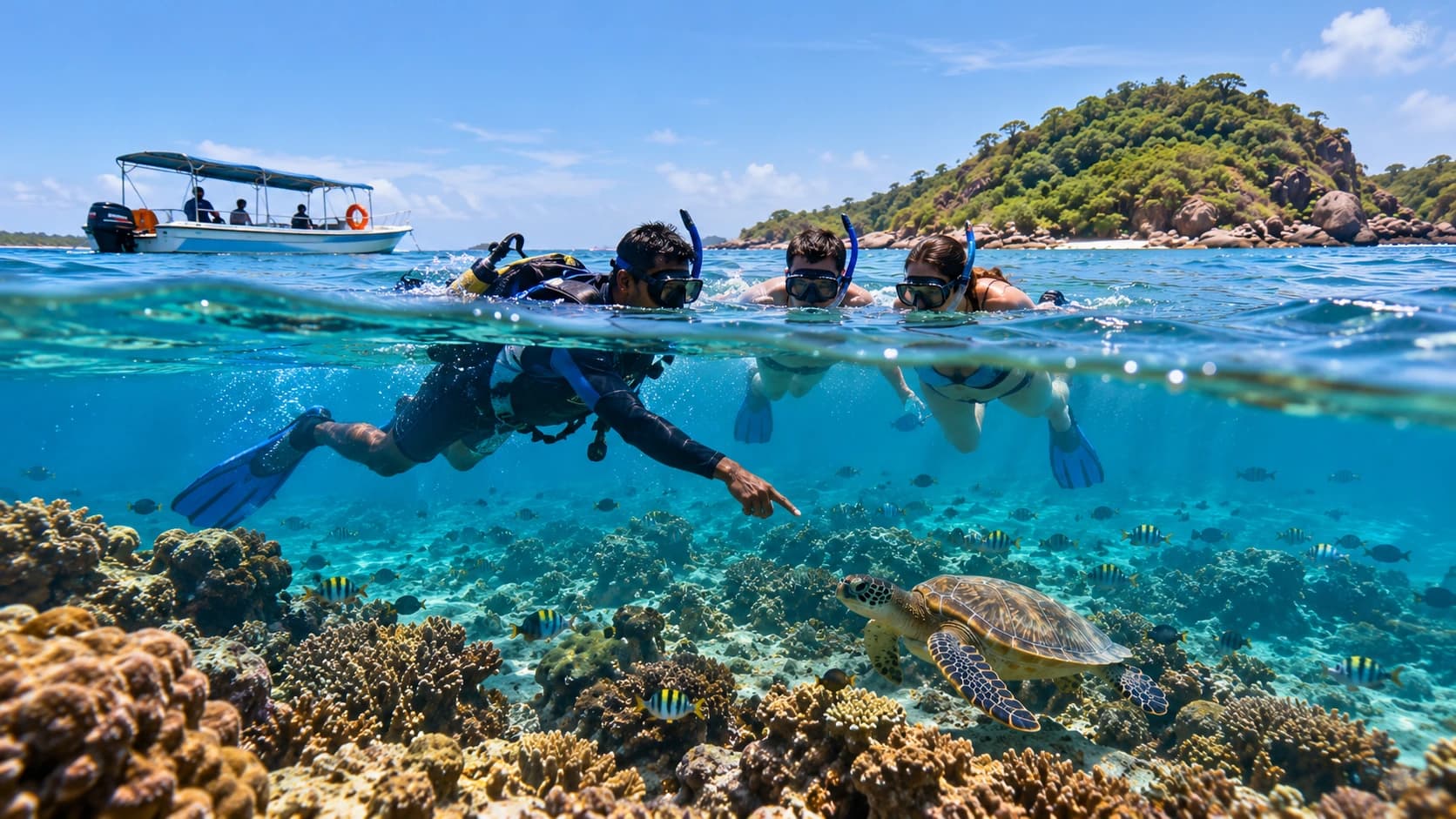
Illustrative imageThe island's coastline offers very different moods: calm bays for swimming, beaches with surf for learning, and fishing villages where the day starts before sunrise.
Depending on the season and your interests, time by the sea can be pure rest or include surf lessons, snorkelling, diving or a boat trip to look for whales.
Each fact comes with its source and the date we last checked it. Rules and conditions change, so please confirm them before you travel.
Sri Lanka has two monsoons. The south-west monsoon (May to September) brings most of its rain to the south-west and the hill country; the north-east monsoon (December to February) rains mainly on the eastern half of the island. In the months between, October to November and March to April, showers can fall anywhere. Conditions vary from year to year.
Official source: Department of Census and Statistics, Sri Lanka (opens in a new tab). Checked on October 11, 2026.
Blue whales are watched off Mirissa, on the south coast, mainly between December and March, and off Trincomalee, on the east coast, mainly between March and July. Sightings are never guaranteed. Whale watching operators are licensed under national regulations, but monitoring has been reported as weak, so choose an operator with care.
Official source: IWC Whale Watching Handbook (opens in a new tab). Checked on October 11, 2026.
Whale and dolphin watching in Sri Lanka is regulated under the Sea Mammals Regulations of 2012. The Sri Lanka Tourism Development Authority has also published draft 2026 criteria for operators, which include no head-on approaches and a vessel speed limit of 5 knots near the animals.
Official source: Sri Lanka Tourism Development Authority (opens in a new tab). Checked on October 11, 2026.
Illustrative imageSample journey
A first introduction to Sri Lanka: ancient sites, hill country and the south coast in one flowing route.
 Illustrative image
Sample journey
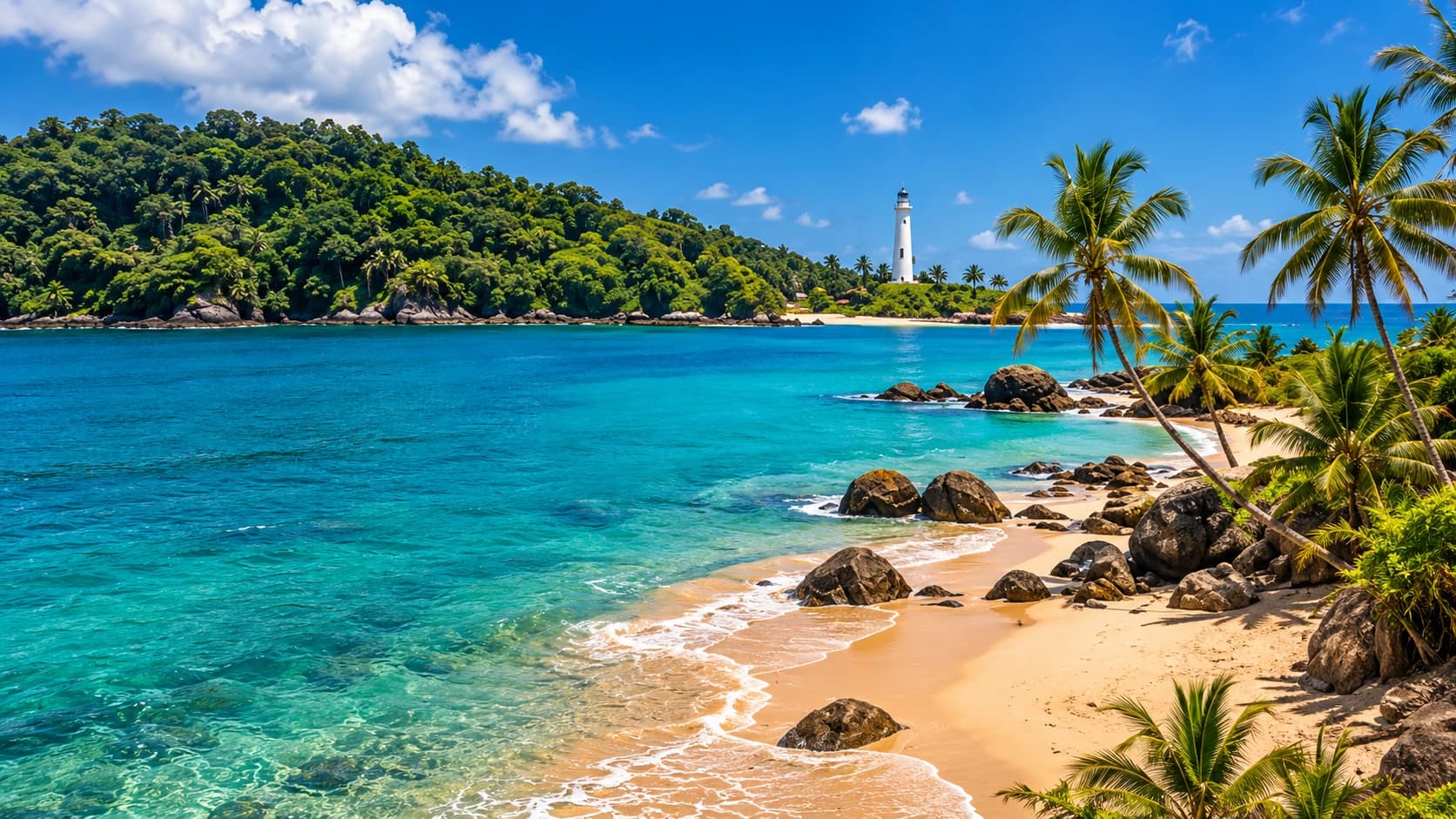
Beaches, fishing villages and the fort town of Galle, with room to do very little or add active days.
 Illustrative image
Sample journey
Start in lowland rainforest and finish by the sea: early walks with a guide, then beach days on the south coast.
Tell us what you have in mind. It takes a few minutes and there is no obligation.
Plan a trip with this experience