 Illustrative image
Sample journey
Island Highlights. View journey
A first introduction to Sri Lanka: ancient sites, hill country and the south coast in one flowing route.
- Sigiriya
- Kandy
- Hill country
- South coast
- Often 10 to 14 days, always adjustable

Central hill country
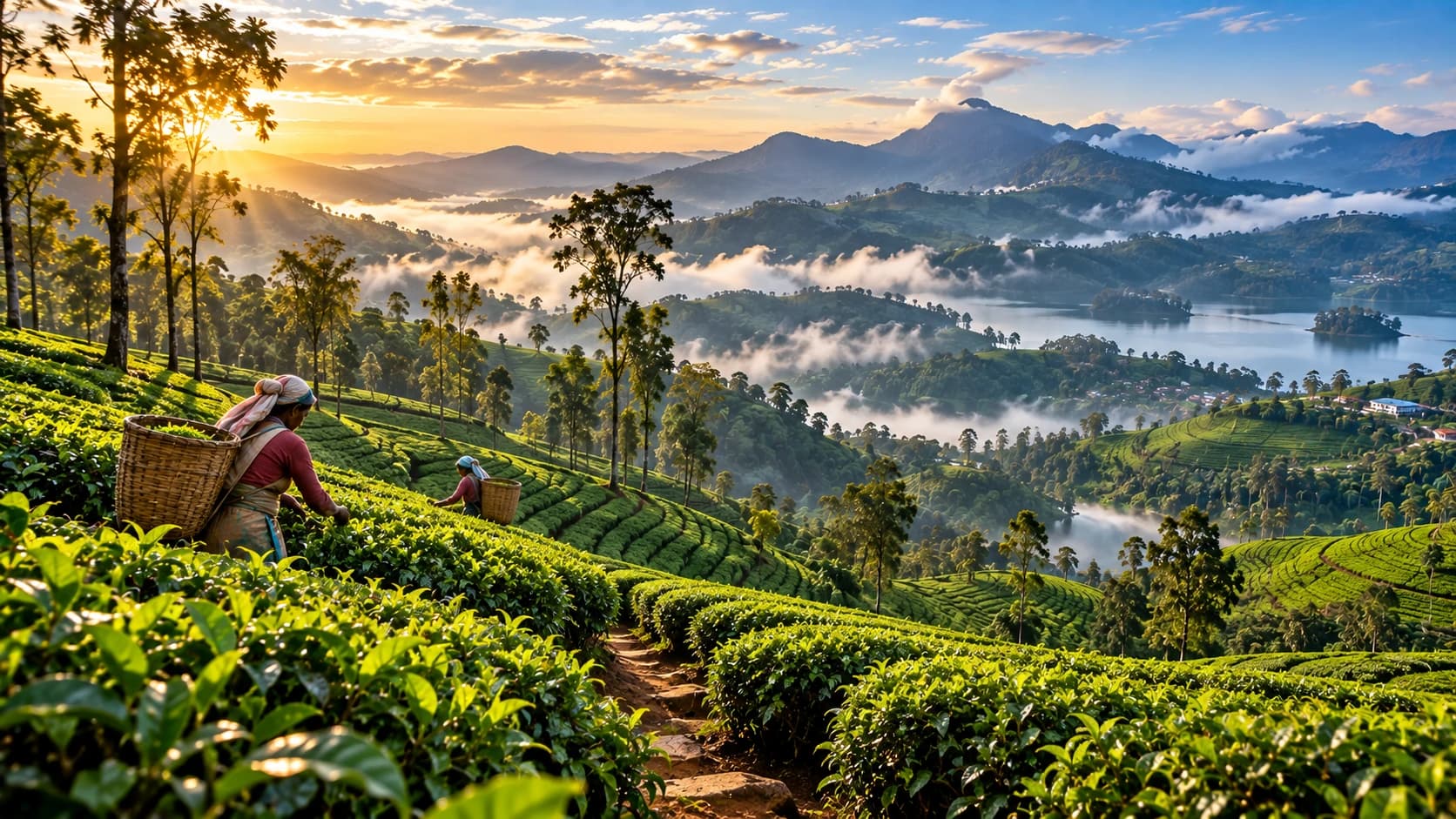
Cool air, tea estates and misty viewpoints high in the central hill country.
Illustrative imageNuwara Eliya lies high in the central hill country, where tea estates cover the slopes and the air is cooler than on the coast. It is a place for walking on estate paths, early-morning views and slow evenings.
The same highlands hold Horton Plains National Park, one of the three parts of the UNESCO Central Highlands of Sri Lanka, which protect the island's largest and least disturbed areas of montane rain forest.
Each fact comes with its source and the date we last checked it. Rules and conditions change, so please confirm them before you travel.
The Central Highlands of Sri Lanka, inscribed in 2010, are a natural property made up of three parts: the Peak Wilderness Protected Area, Horton Plains National Park and the Knuckles Conservation Forest. They hold the largest and least disturbed remaining areas of the island's submontane and montane rain forest.
Official source: UNESCO World Heritage Centre (opens in a new tab). Checked on October 11, 2026.
Sri Lanka has two monsoons. The south-west monsoon (May to September) brings most of its rain to the south-west and the hill country; the north-east monsoon (December to February) rains mainly on the eastern half of the island. In the months between, October to November and March to April, showers can fall anywhere. Conditions vary from year to year.
Official source: Department of Census and Statistics, Sri Lanka (opens in a new tab). Checked on October 11, 2026.
Illustrative imageSample journey
A first introduction to Sri Lanka: ancient sites, hill country and the south coast in one flowing route.
 Illustrative image
Sample journey
A walking-paced journey through the hill country: tea estates, misty ridges and the scenic railway, with time on foot.
 Illustrative image
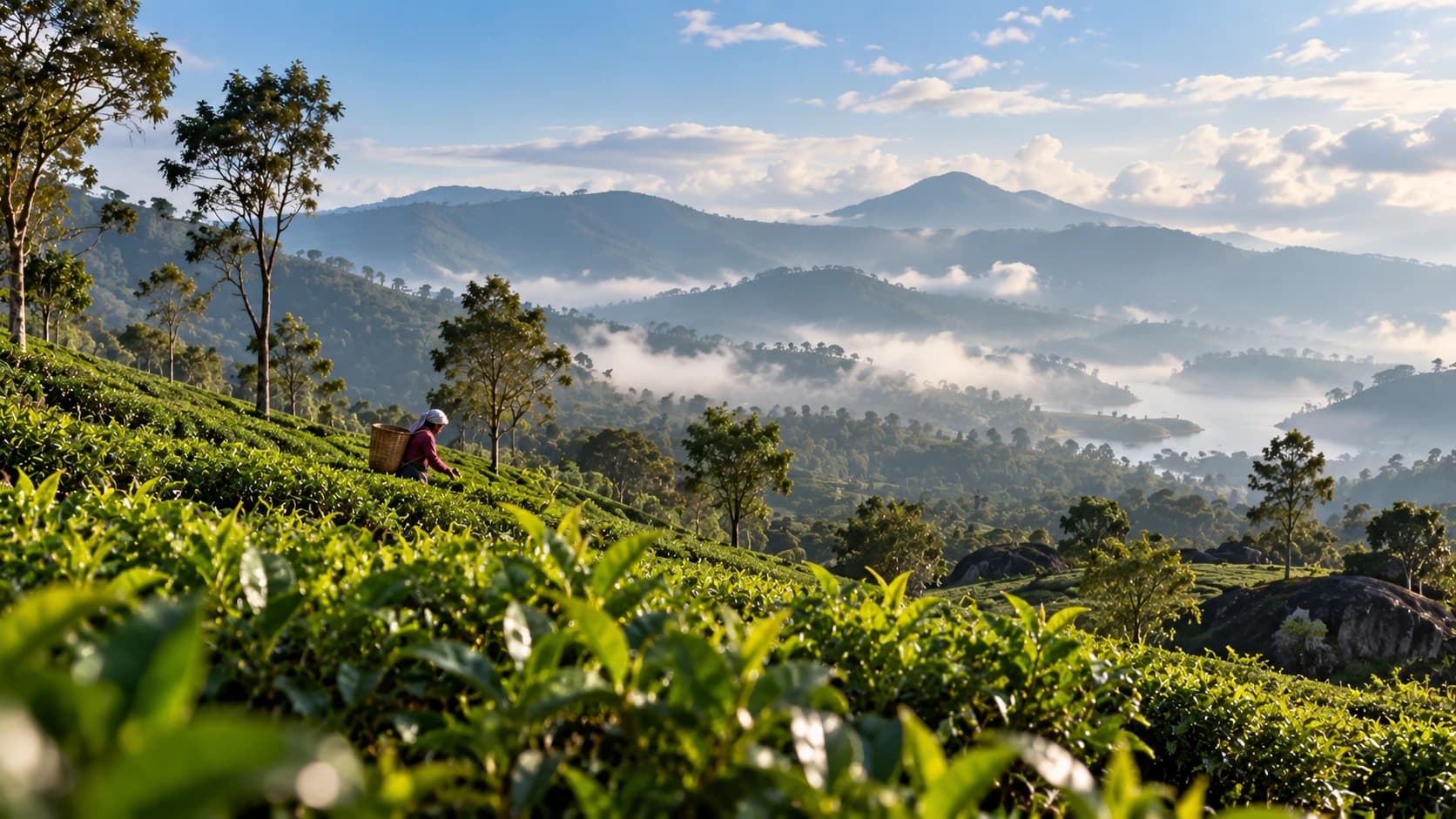
Tea country & mountains
Cool hill-country air, tea estates, walks and one of the island's most scenic train rides.
 Illustrative image
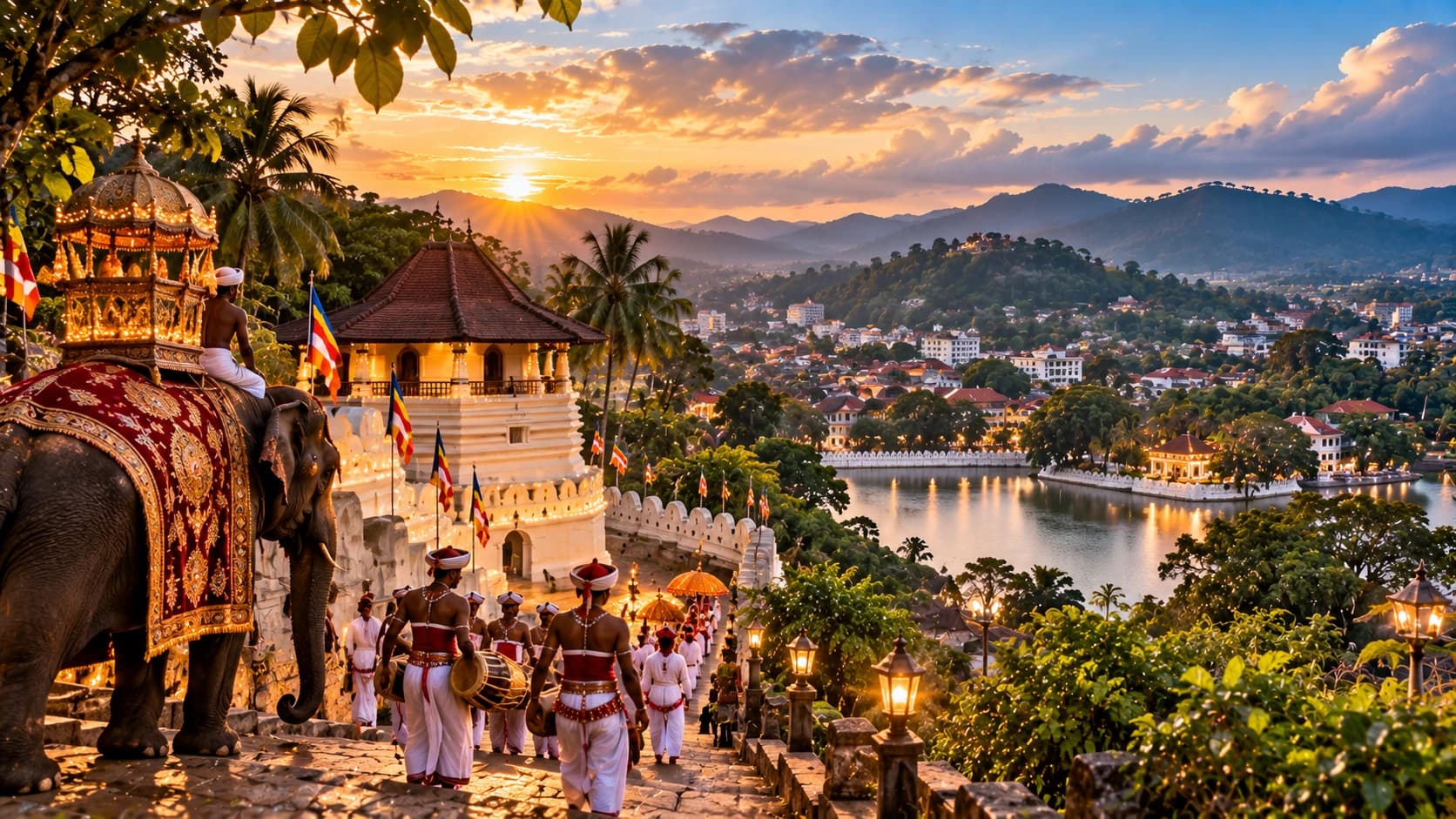
Central hill country
A hill city around a lake: the last capital of the Sinhala kings and home to the Temple of the Tooth Relic.
 Illustrative image
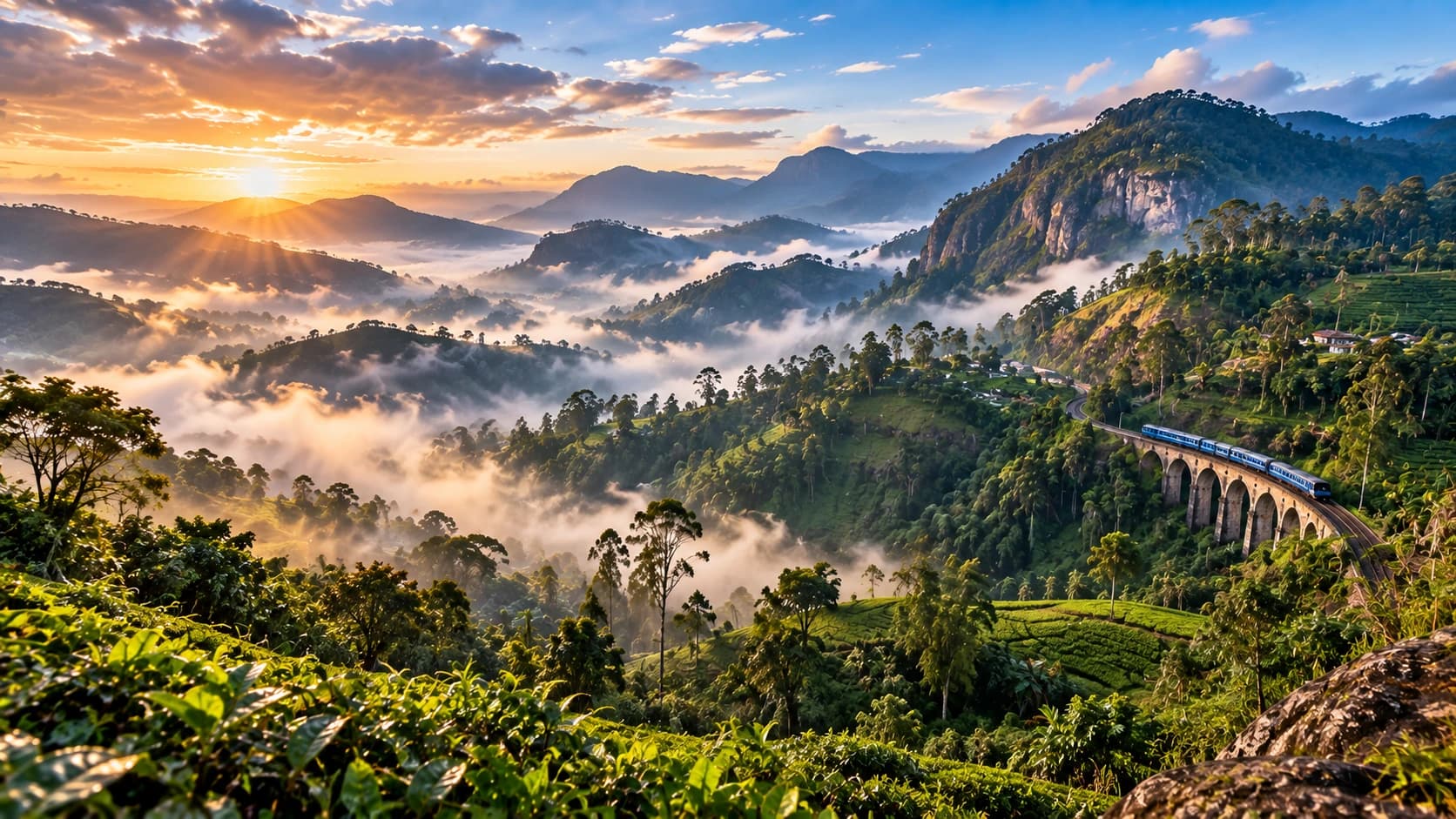
Southern hill country
A small hill-country place for ridge and valley walks, tea slopes and views from the scenic railway.
Tell us what you have in mind. It takes a few minutes and there is no obligation.
Plan a trip that includes this place